
Four Generations, Four Completely Different Commercial Logics: How UAE Brands Can Win Across the Consumer Spectrum
The UAE's consumer market is unusual in its generational complexity. A single premium retail brand in Dubai serves, simultaneously, Gen X professionals who make decisions based on quality and heritage, Millennials who demand authenticity and purpose, Gen Z consumers who filter everything through a values and aesthetics framework, and, increasingly, Gen Alpha children who are already influencing household purchasing decisions with a digital nativity that makes every previous generation look analogue. Getting all four right with a single strategy is impossible. Getting each right on their own terms is a competitive advantage that most brands in the GCC have not yet achieved.
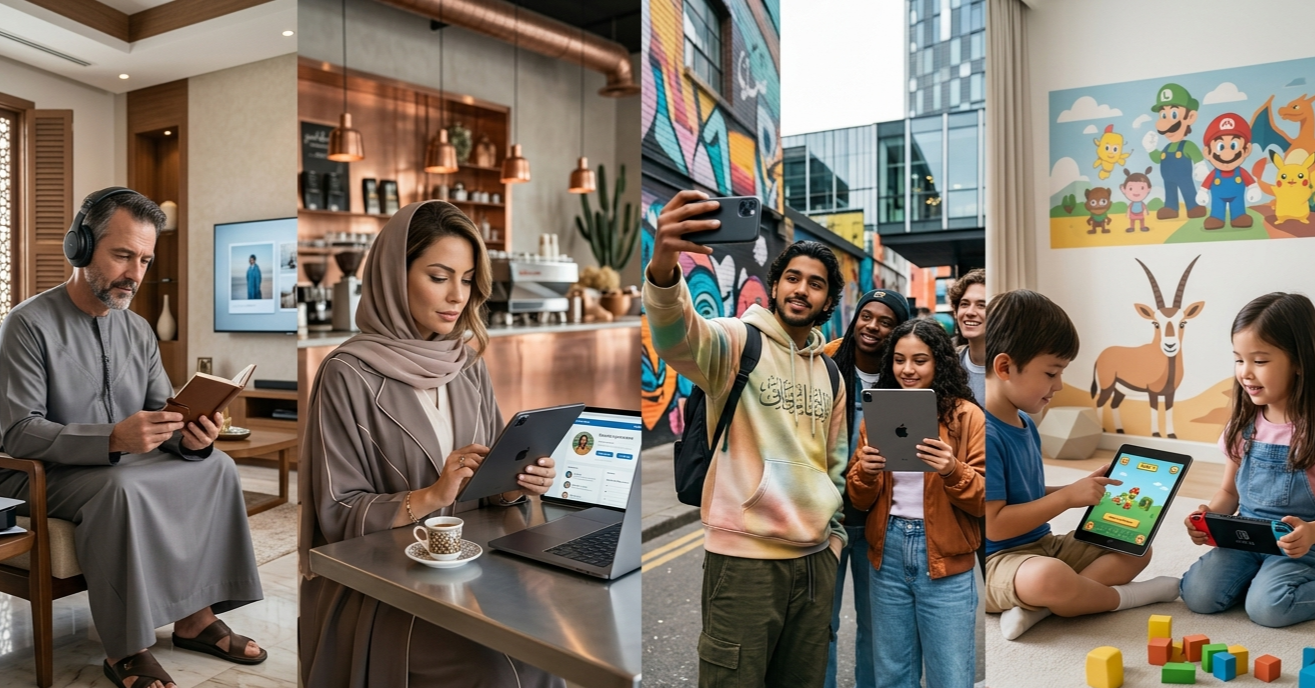
Gen X (Born 1965–1980): The Overlooked High-Value Segment
Gen X in the UAE is, commercially speaking, the most underestimated consumer segment. They are at peak earning power, they are the primary household decision-makers for the most significant discretionary purchases, and they have been so consistently ignored by brands chasing younger demographics that their brand loyalty, when earned, is exceptional.
What they expect
Quality that is verifiable, not merely claimed. Heritage and provenance that is real, not manufactured. Customer service that respects their time and expertise. Transactions that are efficient rather than experiential - they have been through the experience economy and they understand its mechanics.
How to reach them
Email, done well. LinkedIn for B2B. Quality press and editorial content in publications they actually read. Word of mouth within peer networks, which are tightly maintained and highly influential. Notably: not through social media algorithms designed to surface content to strangers. Gen X discovers brands through recommendation more than discovery.
Brand values that resonate
Craftsmanship, expertise, longevity. A brand that has been doing one thing exceptionally well for a long time, that can articulate specifically why its product or service is superior, and that treats the customer as an intelligent adult capable of evaluating that claim.
Millennials (Born 1981–1996): The Purpose-Driven Buyer
Millennials are now the UAE's largest professional consumer segment and the primary audience for the premium lifestyle, wellness and consumer brand categories in which most UAE brands operate. They are also the most written-about generation in marketing history, which means most of what has been written about them is either oversimplified or already outdated.
What they actually expect now
Authenticity - not performed authenticity, genuine transparency about what the brand is, who it is for, and what it stands for. Brands that claim values they do not live are detected and rejected immediately, and the detection is public. Purpose - not corporate social responsibility add-ons, but a genuine articulation of why the brand exists beyond making money. Flexibility - they have lived through enough uncertainty to value brands that offer genuine flexibility in their commercial relationships.
How to reach them
Instagram and LinkedIn are primary discovery channels. Long-form content - podcasts, newsletters, detailed educational content for deepening the relationship once the initial connection has been made. Community: Millennials self-organise into professional and lifestyle communities with strong internal recommendation networks. The brand that is genuinely part of a community has access to word-of-mouth amplification that no paid channel can replicate.
Brand values that resonate
Sustainability that is specific and measurable, not greenwashed. Diversity and inclusion that is visible in the product, the team, and the customer shown in marketing. Founder story and mission - they buy from people as much as from brands. Support for independent and artisan production over mass manufacturing.
"The Millennial consumer in the UAE has more brand options than any previous generation and more access to peer information about those brands. Authenticity is not optional, it is the price of consideration."
Gen Z (Born 1997–2012): The Values-First, Aesthetics-Always Consumer
Gen Z in the UAE is a consumer segment of extraordinary commercial influence that extends far beyond its own purchasing power. They are the cultural arbiters, the generation whose adoption or rejection of a brand determines whether that brand is perceived as alive or dead by every generation younger than Millennial. A brand that Gen Z considers irrelevant will struggle to acquire Millennial customers who want to appear culturally current.
What they expect
Visual coherence - a brand aesthetic that is distinctive, consistent and genuinely considered. Gen Z has been consuming visual media since early childhood and has calibrated aesthetic standards that most brands underestimate. Speed - from discovery to information to purchase decision in seconds, not minutes. Values alignment - but more than values, values legibility. The brand's position on issues that matter to Gen Z should be immediately apparent, not buried in an "about" page.
How to reach them
TikTok is currently the primary discovery channel globally and in the UAE. Instagram Reels. YouTube Shorts and emerging platforms. The content format that works is authenticity over production - rough, direct, personality-driven content consistently outperforms high-production branded content with this cohort.
The three things Gen Z cannot forgive
Performative purpose: claiming values while behaving inconsistently with them. Gen Z's research capability and peer network make inconsistency visible almost immediately.
Talking at them: brands that broadcast rather than converse are not merely ignored, they are actively criticised. Gen Z expects to be in dialogue with brands.
Inauthenticity of any kind: casting models who do not represent the actual customer, retouching that misrepresents product results, sustainability claims that cannot be substantiated.
Gen Alpha (Born 2013–2025): The First Fully Digital Native
Gen Alpha is already commercially significant not as independent buyers, but as the most influential single factor in household purchasing decisions for a generation of Millennial parents who are acutely responsive to their children's cultural signals. A toy brand, a food brand, a media brand, a fashion brand that has genuine currency with Gen Alpha has, by extension, significant influence over household spending.
What defines Gen Alpha's commercial relationship with brands
They have grown up with AI, personalisation, and on-demand content. They expect brands to meet them exactly where they are - in the specific game, the specific platform, the specific community, rather than expecting them to come to the brand. They respond to brands that feel playful, co-creative, and genuinely interested in them rather than in selling to them. Roblox, Minecraft, and the creator economy on YouTube are their primary cultural contexts, brands that exist credibly in these worlds have access to Gen Alpha attention that n traditional channel can provide.
The GCC-Specific Generational Overlay
In the UAE specifically, every generational dynamic described above is overlaid with a cultural context that modifies its application. The tension between traditional values and global consumer culture, the significance of family in purchasing decisions, the specific cultural calendar that defines consumption peaks, and the specific nationality community dynamics that shape recommendation networks, all of these create a GCC-specific version of each generational segment that is meaningfully different from its global equivalent.
The practical implication for brands: generational marketing frameworks developed for Western markets require genuine localisation for the UAE, not translation, but structural rethinking.
Valence helps consumer brands across the UAE develop generationally-informed brand strategies that speak to specific audiences without alienating others. Contact us at contact@valence-advisory.com
