
Why Winning In-Store Is More Relevant Than Ever (Even as E-Commerce Grows)
Every year, another set of statistics confirms that e-commerce in the UAE is growing faster than almost any market in the world. Every year, the same statistics are used to justify reducing investment in physical retail. This is one of the most consequential strategic errors available to a consumer brand in the GCC market because the brands that are gaining ground are doing the opposite: they are investing more in physical retail, and using their e-commerce capability to make that physical investment more valuable, not to replace it.
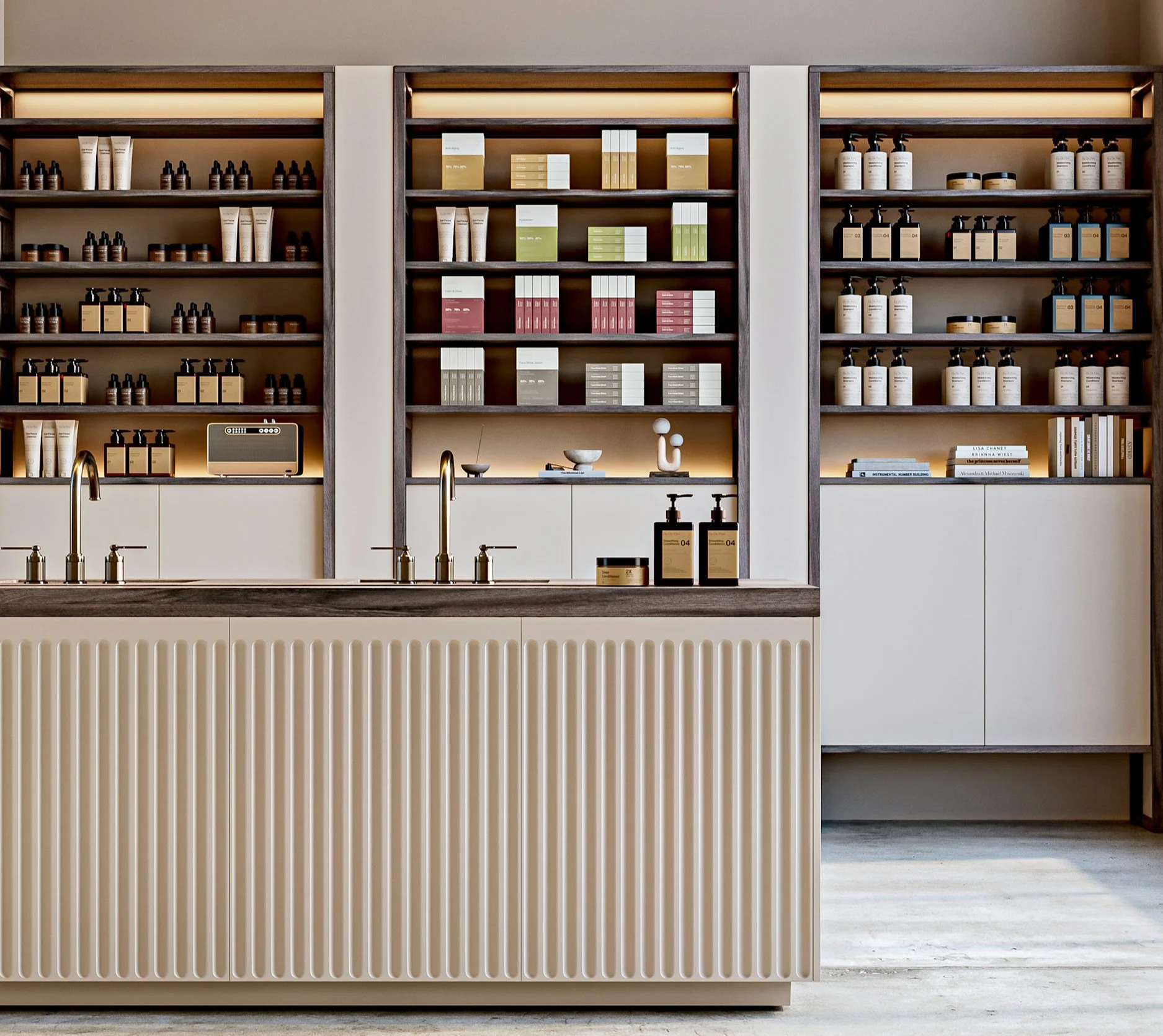
The E-Commerce Misunderstanding
E-commerce growth and physical retail relevance are not inversely related. The most commercially successful consumer brands in the UAE, in beauty, wellness, fashion and food, almost universally have strong presences in both channels, and understand that they serve fundamentally different functions in the customer relationship.
E-commerce is primarily a convenience and replenishment channel. It serves customers who already know what they want, who have already made their brand decision, and who are optimising for speed and ease of transaction. It does not, in any meaningful sense, create brand loyalty. It services loyalty that was created elsewhere, almost always through a physical or interpersonal experience.
Physical retail, correctly designed, is a brand relationship channel. It is where the brand decision is made, where trust is built, where advocacy is created, and where the customer experience becomes a story the customer wants to tell. These are commercially irreplaceable functions, and they are not performed by a well-designed checkout page.
Why Physical Retail Has Become More Strategically Important
It is increasingly scarce
The rush to digital has created a physical retail landscape with fewer, higher-quality, more intentional brand presences. A brand that invests meaningfully in a physical retail experience today is operating in a less crowded environment than it was five years ago because many competitors have retreated to digital-only models.
Scarcity of excellent physical retail experiences is creating a genuine competitive advantage for the brands that deliver them.
It creates content that digital cannot
The most powerful content available to a consumer brand in the current media environment is organic user-generated content - real customers sharing real experiences. The environments that reliably generate this content are physical: a beautifully designed store, an unexpected retail moment, a product experience that can only be had in person. A store that is designed to be photographed is a content engine. A homepage that is designed to convert is not.
It builds the trust that digital cannot
In the UAE specifically, where the consumer market is highly relationship-driven and where trust is built through personal interaction and community recommendation, the physical experience of a brand carries disproportionate weight in the brand decision. A customer who has been into your store, touched the product, spoken to your team, and had a positive experience is exponentially more likely to buy online, more likely to return, and more likely to recommend than one who has only experienced the brand digitally.
What "Winning In-Store" Actually Means in the Current UAE Context
The store as a discovery destination, not a transaction point
The brands that are winning physical retail in the UAE are those that have redesigned the store around discovery and experience rather than transaction. The transaction can happen online (and often does) as a direct result of a discovery that happened in-store. The store's job is to create the experience that makes the customer want to come in, want to return, and want to bring people they know.
Staff as brand ambassadors, not sales assistants
In a market where premium brands compete on experience as much as product, the quality of the in-store interaction is a primary differentiator. The most effective retail teams in Dubai are those trained to have genuine conversations about the customer's specific situation, about the product's specific relevance to that situation, rather than to deliver a sales script. This requires investment in training and in the calibre of retail hire, but the commercial return in conversion and advocacy is measurable.
The store as a media channel
The most forward-thinking brands in the UAE have started treating their store as a media channel, a place where content is created as much as products are sold. A scheduled programme of events, demonstrations, workshops and community moments turns the store from a point-of-sale into a destination that generates regular reasons to visit and regular content to share. Each event creates a new entry point for a new customer segment, and a new social proof moment for the community that already exists.
"In the UAE, where the shopping mall is a social infrastructure and physical retail is part of the cultural fabric in a way that has no equivalent in the West, abandoning physical retail for purely digital channels is not a strategic evolution. It is a surrender of one of the market's most powerful commercial mechanisms."
The Omnichannel Model That Actually Works in the GCC
The winning commercial model for consumer brands in the UAE is not physical versus digital. It is physical that creates the relationship, digital that services and deepens it. The specific mechanics:
Physical: discovery, trust-building, experience, advocacy generation, content creation.
Digital: replenishment, convenience, community, personalised communication, loyalty management.
The connection point: a CRM or loyalty system that recognises the customer across channels, allows the digital relationship to reference the physical experience, and enables the brand to communicate in a way that feels personal rather than automated.
Valence helps consumer brands across the UAE design retail strategies and brand experiences that generate genuine commercial advantage. Contact us at contact@valence-advisory.com
